
Many people are under the impression that we have moved past using tape storage and it seems more like an outdated solution. It goes without saying that losing crucial data can be more costly than implementing a robust data protection plan. In this digital era, people are more inclined towards using hard drives and cloud backup with large storage capacities. The newer generation might not have even heard about tape media drives & cartridge. But, this is not true!
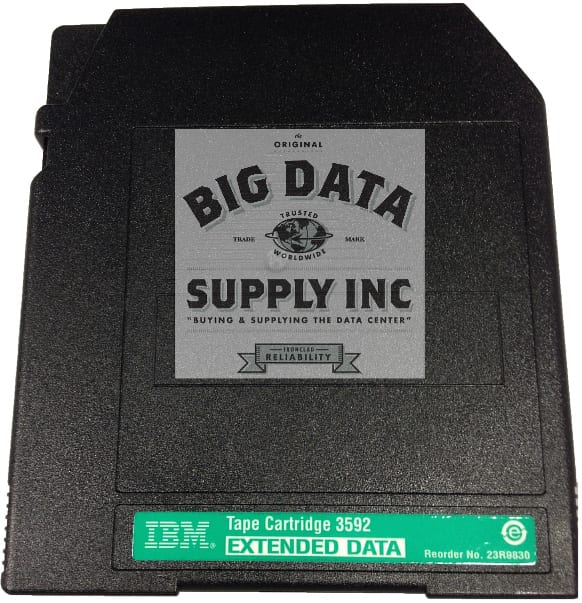
Organizations are still using tape storage such as new IBM 3592JC 4Tb and HP LTO-4 Ultrium Cartridges in California, to store data or create backups. It is a viable option, and in multiple cases, it is far more popular than online storage methods. With such popularity in recent times, let’s discuss why this storage mode/method is still relevant today!
WHY IS TAPE STORAGE STILL RELEVANT TODAY?
Tape storage was created when the first modern computers were found, back in 1950s. Back then, tape rolls could easily hold one megabyte of data on a tape storage. In recent times, tape storage has evolved significantly. Keeping up with the revolution of the likes of USBs, SSDs, and HDDs, there are tape storage devices like Oracle T10000 tape and certified IBM 3592JC 4Tb that could store up to 1 terabyte of data. Typically, people do not consider it to be a practical solution, but the benefits it offer to individuals and organizations is the primary reason of its existence.
Tape storages are capable of reducing the data before storing. It is believed that it is lower than what a hard drive can do, making tape media drives & cartridge a cost effective option. What’s more is that these are cheaper than other options that are available on the market.
Let’s have a look at the pros and cons of tape storage.
It is important to understand that tape media drives & cartridge such as IBM 3592JB tape cartridge 700Gb and certified IBM 3592JD 10Tb are not out of fashion. Yes, the use cases might have reduced due to more convenient options. But, it is a more affordable and durable option when compared to others. A tape storage device can store equivalent amount of data as that of an HDD. People think that it is not a modern technology and is not efficient as other options. The only downside is that it may take a lot of time to create a backup, transfer, or move files on a tape storage. When we talk about internet speed, cloud services and HDDs are a much better option. However, you will have to pay more to get the most out of these services. One of the primary reasons tape storage is still relevant today is because when it comes to restoring the lost data or an entire system, nothing is faster than tape media drives & cartridge.
The durability and affordability it offers is second to none when we compare tape storage and restore options. Hence in a nutshell, the technology may be overtaken by other options or new findings in near future. But, as of this moment tape storage is still relevant and numerous businesses are benefitting from its offerings.
In today’s digital age, data is critical, highly affecting both our personal and business lives. From business documents to cherished children photos to financial records, data is simply everywhere.
Yet, what if disaster strikes? Hacker attacks, hardware failure, or even a natural disaster could easily wipe out this valuable data (that could be years in the making) in an instant. This is why effective data backup strategies are starkly clear, so you can protect yourself against these data losses.
It’s also worth considering that the volume of data created, stored, copied and consumed has grown exponentially in recent years. In 2025, global data creation is projected to grow to more than 180 zettabytes, almost triple the amount (64.2 zettabytes) in 2020.
Meaning, we will face the increasing challenge of not only storing (and backing) up more data, but also keeping it secure and accessible when needed. This underscores the need for reliable and scalable backup solutions.
With that being said, there are three main types of data backup options available: tape storage, disk storage, and cloud storage. This guide will mostly focus on comparing and discussing these three options, including their pros and cons, pricing, and other relevant details.
From this guide you can expect a detailed comparison of tape storage vs. disk storage vs. cloud storage:
In the following sections, we will dive deeper into the specifics of each storage option.
| Feature | Tape | Disk | Cloud |
| Cost | Lowest for large volumes, but requires upfront investment in drives and media. | Moderate, depends on capacity and hardware. | Varies can be pay-as-you-go or subscription-based. Potentially high for large volumes over time. |
| Speed | Slowest due to sequential access. Best for infrequent, large backups. | Faster than tape, good for regular backups. | Varies depending on internet connection and provider. Can be slower for initial seeding. |
| Durability | High if stored properly in a controlled environment. Can last decades. | Moderate, susceptible to hardware failure and degradation over time. | High if data is replicated across multiple locations. Relies on the provider's infrastructure. |
| Accessibility | Requires physical access to tapes and a drive for restoration. | Easy if on-site, can be remote if networked. | Easy with internet access from anywhere. Some providers offer offline options. |
| Scalability | Limited by physical tapes and storage space. Requires manual intervention to add capacity. | Easy to expand by adding more drives or upgrading existing ones. | Highly scalable, can easily adjust storage based on needs without hardware limitations. |
| Security | High if stored off-site in a secure location. Less vulnerable to cyberattacks. | Moderate, requires encryption and protection against physical theft. | Varies depending on provider, look for encryption, compliance certifications, and multi-factor authentication. |
| Additional Considerations | Ideal for archival and long-term retention due to low cost and durability. | Good for fast recovery and regular backups of frequently accessed data. | Offers flexibility, convenience, and potential cost savings for small to medium-sized businesses. |
We can trace the origins of the tape to the early 1950s, when computers were still in their infancy.
Back then, tape reels were the primary method for storing data on gigantic mainframe computers. These reels were also enormous and required difficult manual handling while offering very limited storage capacity compared to today’s standards.
Yet, despite the rise of more modern technologies (disk and cloud), tape remains a key data backup option with its distinctive benefits.
The magnetic particles on tape are sequentially manipulated to store data in tape storage. We can think of it like an advanced version of an audio cassette tape, but designed to handle data instead.
A unique characteristic of tapes is that they can be stored completely offline. This means additional protection against hacking and other cyber threats.
Today's disk storage options include HDDs (hard disk drives) and SSDs (solid State Drives), both with their unique characteristics.
SSDs use solid-state memory to store data, while HDDs use spinning platters. Unlike tape, disks allow for random access, so data can be retrieved quicker.
Unlike tape, disks remain connected to computers and systems. While this facilitates real-time access and frequent updates, it also makes the disks vulnerable to cyber attacks.
Also, RAID configurations often provide performance enhancements and redundancy.
Cloud storage is a response to the growing need for off-site, flexible, and scalable data storage solutions by allowing users to store, manage, and access data via the internet.
The term "cloud storage" refers to the practice of archiving information on distant devices that are accessible over the internet. A cloud provider manages the infrastructure, allowing for a more flexible and scalable storage option.
There is no one-size-fits-all accepted method of storing and backing up data. Tape, disk, and the cloud are the three primary options, and each has its own set of advantages and disadvantages.
Tape storage is the winner when it comes to longevity, offline security, and cost per gigabyte. However, situations necessitating quick data transfers are not well suited to tapes because of their slower speed and physical vulnerabilities.
Disk storage, on the other hand, offers faster access speed and flexibility, making it an ideal option for storing frequently accessed data and regular backups. Yet, it comes with higher upfront investments and may require robust security measures to protect against cyber threats.
Last but not least, cloud storage offers accessibility, continuous availability, automation, and scalability, making it an effective option for both businesses and individuals. Yet, factors such as continuous expenditures, reliance on internet access, and security issues must be considered.
If you want your backup plan to be effective, you need to know your requirements and match them with the correct technology.
Not sure what to do first since there are so many options? Big Data Supply is there to assist you. Once our team has examined your data environment thoroughly, they will walk you through the complexities of the many data storage options and collaborate with you to develop a tailored strategy to sell used data tapes or recycle your hard drives.
Avoid the risk of data loss or damage by taking precautions. Get in touch with Big Data Supply right away so we can assist you with future-proofing your data.
Despite the newer technologies and storage mediums, magnetic storage tapes, including LTO tapes, remain one of the most popular storage mediums across different industries.
Magnetic tapes are currently the most cost-effective storage medium, with the lowest price per TB. This is why, although LTO tapes offer slower, sequential-style read/write functionality than HDDs or SSDs, they remain a popular medium for enterprises, especially for long-term data archiving.
Another key advantage of LTO tapes over other mediums is their longevity, with the lifecycle typically quoted at 30 years. However, despite this long lifecycle, at some point, you’ll need to retire these tape cartridges and probably replace them with newer ones.
So, what can you do about the data stored on these LTO tapes once you’ve decided to retire them? Is it safe just to perform a regular wipe?
In this guide, we will discuss all you need to know about performing secure data erasure and physical destruction of your LTO tape cartridges, and by the end of this guide, you’ll learn about:
And more.
Without further ado, let’s start by discussing your options with your unused/retired LTO tapes.
You have an unused LTO tape cartridge—or cartridges in a tape library—lying around collecting dust. What are your options with them?
First things first, we have to assess the condition of the LTO tapes. Each LTO tape is unique, and we’ll need to consider several key factors:
By considering these factors, we basically can choose between three options:
When discussing the legality of disposing of LTO tapes—or any digital storage media for that matter—we have to consider two different regulations: environmental and data security laws.
Under the current laws as regulated by the U.S. EPA (Environmental Protection Agency) regulation 40CFR2v3 and RIOS61, it is perfectly legal to dispose of LTO tape cartridges without any special means.
Under this regulation, LTO tape cartridges are considered as non-hazardous waste, so technically, you can simply throw the tape in the trash bin, and you’re basically done.
However, your local and state regulations may be more restrictive than this EPA 40CFR2v3 and RIOS61 regulation, so we’d recommend reviewing them before you dispose of the LTO tape. This also applies if you are a non-U.S. business and/or operating in different regions. Make sure to review your country or regional regulations, and make sure to check with the tape’s datasheet (i.e., on the vendor’s official website) for information about the materials contained in the cartridge.
Yet, while you are legally allowed to dispose of LTO tape cartridges according to environmental regulations, it may not be the case according to the applicable data protection laws.
In today’s digital and social media age, various data protection rules, laws, and regulations are implemented in various countries and/or regions to control the collection, use, transfer, and—related to this case of tape disposal—storage of sensitive and personal information.
The pioneer of such laws was the GDPR (General Data Protection Regulation,) which applies to countries and organizations within the EU (European Union.) However, now many countries outside the EU have also created and implemented their own data protection laws.
The US doesn’t have a singular law that covers data privacy, but there is a mix of industry-specific laws and state-level laws. Meaning, organizations in the US are pretty much free to dispose of their LTO tapes and do what they want with customers’ sensitive data, unless the industry or state they belong to has its own data privacy law.
At the moment, only three states in the US have their consumer data privacy laws:
Different regulations designed for different industries and/or specific types of data are also in effect in the U.S., including:
If you are in a country or state with specific data protection laws or in an industry that requires you to protect sensitive consumers’ data, most likely, you’ll be required to perform secure data eradication or perform secure physical destruction that complies with these regulations before you can dispose of your LTO tape cartridges or even before selling your LTO tapes to other parties.
As discussed, if you are in a regulated state, country, or industry, you will be legally required to securely erase sensitive data from your LTO tape cartridges before you can dispose of, recycle, or sell them, whether via secure data erasure (while keeping the tape cartridge intact) or complete physical destruction. The idea is to ensure sensitive data can’t be recovered and used by malicious parties.
However, even when secure data erasure isn’t legally required in your location and/or industry, leaving your data intact as you dispose of/sell your storage tape may expose your business and your customers to enormous risks. The sensitive data stored in your data tapes can provide cybercriminals and malicious actors with a valuable vector for them to attack your business and cause potentially lasting damage.
With that being said, we’d recommend always performing secure wiping to your LTO tapes before parting ways with them in any way.
So, how can we securely erase data stored in the LTO tapes and prevent it from being recovered?
There are various data erasure methods you can use, but here are some of the most popular ones:
Professional on-site or off-site tape destruction with Big Data Supply Inc.
As you can see, although there are various methods you can try by yourself to securely wipe or physically destroy your LTO tapes, none of them are 100% guaranteed, and this is where having the help of a professional data destruction company can be very valuable.
Big Data Supply Inc. provides professional data destruction for every storage media format—including LTO tapes, as well as professional tape shredding that complies with every major regulation. With decades of expertise, Big Data Supply Inc. is ready to keep your disposal project within your timeframe, budget, and security standards.
Big Data Supply Inc. will ensure the sensitive/personal data stored within your LTO tapes are securely eradicated and unrecoverable. To ensure compliance, Big Data Supply In.c as a certified ITAD company, can also issue a legally-recognized Certificate of Data Destruction for each secured data tape.
Depending on your industry or location, the Certificate of Data Destruction may be considered a legal requirement.
Contact Big Data Supply Inc. to discuss your project right away.
As discussed, if your tape cartridge is still in fairly good condition and/or still has a good resale value, then the most viable option is to sell them to maximize its value. This is, of course, after considering the secure data erasure methods we’ve covered above.
In selling your old LTO tapes, technically, you have three main options:
Also, if you are a data center, then selling your LTO tapes may be a core aspect of your data center decommissioning process.
Timing is key: maximizing your LTO Tape’s resale value
When should you sell your LTO tape to maximize its resale value?
It’s pretty obvious that the older the LTO tape is, the lower its value will be. Also, whenever a new model and/or major update is released, the old tape cartridge model will typically go down in value.
For example, when LTO-7 was just released, LTO-6 tapes went down in value quite significantly. So, if you expect a major release, it’s typically a good time to sell before the value goes down further.
However, if you are planning to get a replacement tape cartridge (or upgrade your tape drive cartridges), selling your old tapes and/or drives too soon may not be a good idea because the price of the replacement tape and drive might still be too high.
In such scenarios, you’d want to find the right time when the old tape’s resale value is still high enough while the replacement’s price has gone down a bit. This is to ensure the upgrade is cost-effective.
Since magnetic tapes—including LTO tapes—are extremely sensitive to storage conditions, it’s necessary to inspect your LTO tape’s condition on a regular basis. Of course, inspection is especially important when you are looking to sell the tape to appraise its potential resale value.
While this assessment will not identify all potential issues that can occur in an LTO tape cartridge, these inspection criteria will provide you with a good start.
Note: if your tape fails any of these criteria below, do not play back the tape before fixing the issue, or else you’ll put both the tape cartridge and the drive at risk.
Check the tape’s physical (external) containment whether there’s any damage that may compromise the tape. If the external container, cassette, or reel has any damage that affects its structural integrity, most likely, the tape inside is also contaminated and/or physically damaged.
If the tape passes the external container assessment, the next step is to inspect the edges of the tape and the interior of the container. Look for any symptoms of fungal contamination, like any thread-like growth and any presence of black/brown/mustard colorization. If fungus is suspected, inspection should be stopped. The tape should be isolated and treated by professionals immediately.
Remove the tape from its container, and smell the tape immediately. Tapes with binder hydrolysis (essentially, destroying itself) may give off a distinctive, pungent odor that wears off almost immediately. Tapes with binder hydrolysis can stick in the drive during playback, so avoid playing back the tape before treatment.
Tape can be contaminated due to poor storage, so check the tape’s edge and the cartridge for any signs of liquid contamination.
Check the tape’s edge for any white powder-like or crystal-like residue. This may indicate the tape is starting to break down. Also, check the insides of the container/reel/cassette for the presence of oxide flakes.
Check the tape pack for any irregularities:
To assess your tape pack’s condition, shine the pack from above and slightly behind with a light source (i.e., a flashlight), then tilt the tape edge at around a 45-degree angle from the light source. Inspect the pack thoroughly.
An IT disposition company specializes in buying, and selling used IT assets, used laptops, desktops and tablets, so they'll handle all the work while ensuring both themselves and your company stay compliant with relevant regulations.
A key advantage in selling through ITAD companies is that they can handle data deletion. Look for R2v3 & RIOS recycling companies like Big Data Supply Inc. that not only ensure secure data deletion but will ensure all processes taken to your LTO tapes, old hard drives from SanDisk, Hitachi or Seagate, and other IT assets are environmentally friendly.
R2v3 & RIOS certification is awarded only to companies that have achieved responsible recycling standards that also have followed appropriate data security best practices. On the other hand, RIOS certification is an ANSI-accredited standard that acknowledges the service provider's compliance with ISO:9001 (service quality), ISO:14001 (eco-friendly), and OHSAS:18001 (health and safety).
Big data Supply Inc. can also provide Certificates of Data Destruction after your LTO tape cartridge has been securely wiped. In the event that you are needed to prove your company's responsibility to consumer data, these certificates are legally recognized.
Keep in mind that when selling to ITAD companies, you don't set your own prices. Typically these companies will send an offer for your drives, and you can either choose to accept or refuse that price.
Securely wiping sensitive/personal data stored on your LTO tapes can be challenging and time-consuming, especially if you don’t know where to look.
The best, most viable approach is to sell your used LTO tapes and other types of equipment like used CPU and old GPU, to an ITAD company like Big Data Supply Inc., which will handle everything from securing your data to packaging and transporting your old LTO tapes.
Don't hesitate to leave any comments and questions below, and if you'd like to inquire for a quote on selling your old LTO tapes or tape drives, contact us at 1 (866) 411-4890 at or fill out the online form here.
In our always-evolving and rapidly advancing digital environment, upgrading and replacing electronic devices have become the norm, including for your network system.
Yet, when upgrading a network, what should be the fate of your decommissioned Cisco switches? Simply tossing these switches into the dumpster poses significant risks far beyond their initial purchase price, so conscious end-of-life handling of your switches shouldn’t be an afterthought.
The dangers of irresponsible e-waste disposal loom large globally. Network equipment—including switches—often contain components harmful to the environment if they leech into landfills, endangering human health.
Improper disposal of electronics can also lead to the loss of valuable resources like copper, silver, silicon, and other precious materials. Failing to recycle these materials necessitates the need for mining practices, further harming the environment.
Beyond the materials, improper disposal of your Cisco switches can expose your organization to data and confidentiality breaches. Failure to securely wipe your Cisco switches can allow malicious actors to access the retained network configurations, passwords, and other sensitive information.
So, what should we do to these retired Cisco switches? Proper handling of retired electronics isn’t merely good practice, but today, it’s a fundamental corporate responsibility. In this article, we will explore the strategic and ethical practices available for responsible handling of your old Cisco switches.
Before we explore the options available, let’s first elaborate on the specific risks stemming from improper decommissioning of the sold Cisco switches.
Improper decommissioning doesn’t merely mean careless disposal to a landfill, but the issues can be much more complicated and detrimental.
Here is a breakdown of some significant risks:
Even if the switch is directly disposed of to a general landfill, there's an increasing chance of e-waste illegally ending up in developing nations, creating a cascade of environmental and ethical exploitations far beyond what was initially imagined. This is why properly handling these retired Cisco switches is highly critical.
In the next sections, we’ll explore the solutions that not only mitigate these risks but also maximize any remaining value of the Cisco switch. Let’s start with the first one.
The first option we have in ethical e-waste handling is responsible disposal.
Responsible here means the Cisco switch is disposed of in a manner that focuses on three things:
Fusing these goals with convenience means you have a winning strategy for decommissioning old Cisco switches responsibility, and there are a few options we can examine:
Cisco offers its official Takeback and Reuse program, demonstrating its commitment to sustainability.
With a simple online procedure, you can arrange for convenient pickup of qualified Cisco switches (or other Cisco hardware and even certain competitor gear) directly from your location.
Cisco then handles secure decommissioning, recycling, and potential refurbishment of equipment for possible reuse within suitable use cases.
When considering this option, make sure to confirm the eligibility details on Cisco’s website, as they periodically adapt the criteria.
Another viable option is specialized R2v3 and RIOS certified recyclers like Big Data Supply.
These companies specialize in dismantling and recycling electronic devices safely and in compliance with environmental regulations.
When using this option, the key is to choose the right recycling company, and you should consider the following factors:
Never entrust your old switches—or any device— to disposal parties without thoroughly erasing its memory.
A standard disk format isn't adequate for Cisco Switches. Invest in secure wiping programs designed for networking hardware; consider getting help from certified IT asset disposal companies specializing in complete data sanitization in line with compliance standards.
Prioritizing data erasure can help you minimize the security risks associated with improper disposal, not only in protecting sensitive business information, but also mitigating the potential for regulatory non-compliance and reputational damage.
Can your Cisco switches get new life?
Before disposing of or recycling your old Cisco switches, it’s worth first brainstorming for repurposing possibilities. The following second-life scenarios might unlock extra value:
If you are striving to learn more about networking or are actively pursuing IT certifications, you can leverage the retiring switches as learning tools by setting up a home lab environment.
Old Cisco switches provide a tangible learning platform to experiment with configurations, VLAN setups, routing protocols, and troubleshooting without incurring potential disruption to critical business operations.
Working with these switches can allow individuals to gain invaluable firsthand experience, honing their understanding of networking principles and their networking skills without risking disruption to critical business operations.
While there may be limitations such as lower speeds and potentially outdated features compared to current products, they still offer the ability to build core networking competency.
Various charities and tech-focused educational initiatives sometimes accept outdated hardware donations. Often, these are more relevant for learning component identification and fundamental hardware concepts versus powering active infrastructure. Before contacting potential organizations, check eligibility guidelines, as donation acceptance rules are typically stringent.
While outdated for high-speed production networks, old switches can serve an ongoing in-house role. Consider a "spare" environment, separate from core operations. Here, old switches facilitate learning how firmware updates impact live equipment, testing network configuration changes without live production risk, or having spare compatible parts on hand for emergency replacements in mission-critical scenarios where sourcing might be delayed.
When considering repurposing your old switches, it’s vital to highlight that these options are a “bonus”, and not always a guarantee. There is the possibility that your old switches don’t suit any repurposing opportunities for one reason or another.
Thus, be honest about the time and money investments versus the utility derived from the repurposed function. Sometimes, even if repurposing is viable, simple resource allocation makes final recycling more strategic than squeezing minimal extra use beyond their primary service period.
If your old Cisco switches still have functional value, there’s the option to recoup part of your initial investment by reselling these switches. Reselling your switch will also prolong its lifetime, continuing the device’s use for years in the future.
There are several avenues cater to reselling equipment, including:
Online marketplaces like eBay, Amazon, Facebook Marketplace, and various online resale forums can be your viable option to sell your old switches.
When selling on these platforms, you have the utmost freedom and control to sell to vast potential buyers. However, it’s important to proceed with caution:
There are companies specializing in the refurbishment and resale of used IT equipment, like Big Data Supply, which offer an appealing alternative with advantages like:
When selling used Cisco equipment, it's crucial for you to have realistic expectations about the potential yield from reselling the old switches.
Reselling will not recoup the entirety of your initial equipment investment, except in very rare cases. So, don’t be fixated on the original purchase price and have the right mindset: recouping some value is better than the complete loss by having your switches end up in a landfill. Any financial recovery should be viewed as a positive offset, and environmental responsibility should be prioritized as your underlying success goal.
Some considerations:
Before your old Cisco switches leave your possession, be it for resale or disposal, it’s important to consider a few critical aspects to avoid unexpected pitfalls or frustrations.
Below are some important pre-disposal or resale factors to consider:
Before initiating resale, it’s important to thoroughly Cisco’s intricate licensing models to ensure smooth transfer of ownership.
Support contracts, feature licenses, and sometimes even basic device-level subscriptions are often tied to original purchasers (or the company they are in,) and you should not assume that they are freely transferable on the secondary market.
Understanding relevant license clauses to your exact Cisco switch model can help you navigate two key points:
In short, thoroughly study the license clauses for your model on Cisco’s support website.
A visual inspection and power-on cycle can only tell a fragment of your switch’s condition.
Consider:
Researching viable disposal options, preparing listings, facilitating sales interactions, and packaging hardware all demand significant time investments.
It’s critical to be honest with yourself about your available time frame. Some methods can be very fast and near-instant, like Cisco's Takeback program, but carry little resale value. On the other hand, finding your own buyer can net the most value but may also require the most time.
Weighing time against return means determining your 'price' beyond dollars — is rapid offloading more significant than potentially recouping maximum value through time-demanding sales channels?
Remember, these elements affect resale prospects, ease of disposal, and maybe even long-term legal burdens regarding transferable components like licenses. Taking time for assessment protects you and offers an informed starting point on the chosen end-of-life journey for your old Cisco equipment.
Throughout this article, we’ve outlined the risk of throwing out your old Cisco switches, which can pose a danger to the environment. Even obsolete switches deserve a decommissioning process far more thoughtful than simply ending in the nearest landfill.
We've also explored several avenues available for the responsible handling of your retired switches:
Should any of these options interest you, don’t hesitate to contact Big Data Supply. The knowledgeable team at Big Data Supply stands ready to help. Explore our resource guides or contact us for tailored recommendations specific to your unique setup and goals.
In the world of the networking industry, the name Cisco Systems is certainly not a stranger. In fact, for some people, Cisco is probably the first name they have in mind when it comes to enterprise-grade networking solutions.
Cisco’s routers, switchers, and other networking hardware have powered countless businesses and institutions worldwide. Yet, its stellar reputation also naturally results in its relatively expensive price tags compared to the competitors. Acquiring top-tier Cisco equipment can be incredibly expensive, especially when buying new.
This is why many opt for buying used Cisco equipment as a more viable and cost-effective alternative.
Buying used Cisco gear can offer the following benefits:
Yet, despite these benefits, navigating the world of used Cisco equipment has its challenges, and this is where this guide comes in.
This article will walk you through the intricacies of finding a reliable and trustworthy source for used Cisco equipment. We’ll cover how to assess your needs, options for buying used Cisco equipment, factors to look for (beyond price) when evaluating sellers, and more.
Without further ado, let us embark on this journey right away.
When it comes to buying used Cisco equipment, you shouldn’t approach it as a one-size-fits-all scenario.
Before even browsing different seller inventories or marketplaces, it’s critical to first understand your organization’s (or your) specific requirements. This self-assessment process is crucial to ensure smart, long-term investment decisions.
Ask yourself the following key questions:
Start by identifying the specific models and features you actually need:
Do you need to expand an existing network with compatible routers or switches? Do you need to replace a specific failed component? Do you need to upgrade your network capabilities?
Answering these questions will guide you toward specific Cisco equipment. Consider factors like port requirements (both in terms of quantity and type,) security features, routing protocols needed, and Power over Ethernet (PoE) needs.
Establishing a clear budgetary framework is simply crucial to assess the feasibility of purchasing used Cisco equipment. It’s important to be realistic about how much you can allocate for this purchase.
Also, consider that even within the used marketplace, prices can fluctuate depending on equipment age, condition, and seller warranties.
Do enough research to identify the average prices for the models you need to get a feel for realistic budget expectations.
Evaluate the importance of the networking equipment to your day-to-day operations.
How much downtime can your organization tolerate in case this purchased equipment goes wrong (maximum downtime tolerance)? If the used Cisco equipment is going to be a part of mission-critical systems, you may want to get refurbished equipment with better warranties or greater redundancy to mitigate risks associated with potential failures.
Purchasing used Cisco equipment can help you save money upfront, but it’s important to remember the ongoing maintenance aspects.
Consider whether your organization has the in-house ability to maintain, configure, troubleshoot, and upgrade the purchased Cisco equipment. If the answer is no, then factor in the potential cost of getting outside technical support services, which can impact the overall budget.
Answering these key questions and assessing your specific needs upfront can help you build the foundation for informed decision-making when it comes to purchasing used Cisco equipment. With this proactive approach, you can ensure that the used equipment you get aligns with your budgetary constraints, operational considerations, and functional requirements.
Now that you’ve outlined your specific needs, it’s time to explore where you can actually source your used Cisco equipment. There are several viable options available, each offering its own unique pros and cons. Let’s take a closer look and compare the main options:
Cisco offers its official pre-owned/refurbished equipment program called Cisco Refresh, which can offer the closest experience to buying new Cisco equipment without the expensive price tag.
Being an official pre-owned program, the equipment has undergone a meticulous refurbishment process directly by Cisco-certified technicians, so you can be confident about quality and reliability.
Pros:
Cons:
Online marketplaces and auction sites like Amazon, Craigslist, Facebook Marketplace, and eBay, among others, are the digital “wild west” when it comes to purchasing used digital goods, including Cisco equipment.
You’ll encounter the wildest variety of listings, and if you are lucky, you may discover very good deals with very low prices. Yet, buyer beware.
Pros:
Cons:
In the event of company downsizing, business closures, or other events where large inventories of IT equipment go up for sale, there may be opportunities to purchase used Cisco equipment (in decent or good condition) through auctions and liquidators.
This can be a potentially good source for bulk purchases, especially if you have deep Cisco expertise in-house. However, it’s best to approach this option with a healthy dose of caution.
Pros:
Cons:
When it comes to maximizing the value of your used Cisco investment and, at the same time minimizing risk, specialized IT equipment resellers like Big Data Supply deserve serious considerations.
These specialized resellers focus their operations on acquiring, refurbishing, and reselling networking equipment and may offer the ideal balance for various businesses.
Pros:
Cons:
We’ve explored the different options where you can buy used Cisco equipment, and selecting the right seller plays a huge role in the success (or headache) of your purchase.
Below, let’s examine the key factors to consider when evaluating resellers of used Cisco equipment:
Don’t hesitate to dig into the seller’s background. The seller’s reputation and expertise are critical factors to consider, so try to evaluate the following:
Based on your self-needs assessment, you should be able to pinpoint what specific Cisco models you are looking for. The idea is to find a seller that offers this model (and preferably, in working condition.
Does the seller offer a diverse enough inventory of used Cisco equipment? Can you find the specific models and configurations that meet your needs?
Big Data Supply Inc. maintains an extensive catalog covering switches, routers, firewalls, and more. The more diverse the inventory of the seller, the more chances there are of finding the precise model and configuration you need.
Cost-effectiveness is obviously the reason and main benefit of buying used. Consider the following:
Ensure the seller provides clear, transparent pricing, and compare this against multiple resellers.
No matter how good the used Cisco equipment is, things can go wrong. This is where having warranties can give you peace of mind, a safety net against potential malfunction.
Consider the following:
Choose a seller who offers comprehensive warranties and, beyond that, access to post-purchase technical support if issues arise
When purchasing used network equipment, you cannot overlook the security aspect.
You’d want to consider the following:
Choose a seller that prioritizes data security, demonstrated through certifications like RIOS and R2v3, as well as their commitment to rigorous data sanitization best practices.
Although Cisco networking hardware is known to be durable, it can still be sensitive to mishandling. Look for a seller who can ensure secure shipping practices, including proper packaging that can adequately protect the goods during transits. This is important to make sure the purchased equipment arrives at its destination undamaged and intact.
Look for a seller with expertise not only in Cisco technology but also in secure shipping practices like investing in specialized packaging materials and partnering with reliable carriers to ensure your equipment arrives safely at your doorstep.
After we’ve understood the different options available and discussed what separates a good seller from a great one, Big Data Supply is a compelling choice for your used Cisco products
Here’s why Big Data Supply is an ideal go-to-source not only in purchasing used Cisco goods, but also all your networking infrastructure needs:
Big Data Supply is R2V3 and RIOS certified recycler. R2V3 demonstrates Big Data Supply’s adherence to responsible electronics recycling, while RIOS is only given to those who maintain the highest secure data sanitization practices.
When you sell used Cisco equipment to Big Data Supply, you can be confident that all data has been securely erased and that the refurbishment processes are handled in an environmentally responsible manner.
Big Data Supply has an experienced team capable of understanding your organization’s unique networking requirements. They are capable of guiding you toward the most cost-effective Cisco solutions.
You can also expect comprehensive pre-and post-sales support, ensuring that you gain access to technicians before you buy to ensure compatibility, assistance with installation/configuration, and setup assistance or troubleshooting after your purchase.
To summarize, when you choose Big Data Supply as your used Cisco equipment source, you can benefit from its certifications, expertise, commitment to data security, and extensive inventory, among other benefits.
Trust Big Data Supply to deliver only the best quality equipment and excellent customer service, allowing your business to focus on its key competencies and thrive.
This section will equip you with some final pieces of knowledge to maximize your used Cisco equipment investment.
Our recommendation is to use these additional tips as a checklist before finalizing any purchase:
Try to obtain the original manuals and documentation for the Cisco equipment you are purchasing from the seller. If that’s not possible, make sure you know how to access Cisco’s extensive online documentation. (You may need the product serial numbers to access this online documentation).
These resources are essential to ensure smooth configuration, and in the event when troubleshooting is needed down the line.
Cisco provides clear instructions for when different product models reach End-of-Life (EOL), End-of-Support, and End-of-Sale status.
Purchasing used equipment that has reached the EOL state may lead to limited access to software updates or support, as well as compatibility difficulties. Thus, be cautious of buying equipment that is very close to or already being EOL.
Don’t hesitate to try to negotiate with your sellers. Especially if you are buying multiple items or making bulk purchases from the same seller, they may be open to negotiating prices.
Also, if you spot minor damage (but the device is still functional), a little haggling could work in your favor.
Following these additional tips can enhance the likelihood of securing high-quality and reliable used Cisco equipment, improving your buying experience. Don’t forget to take some time to research comparable pricing online, common complaints about the model you’re purchasing, and its typical use cases. A bit of online research could steer you from equipment that doesn’t align with your needs.
Used Cisco equipment holds surprising potential for both performance and cost-savings, especially if you approach it with a savvy buyer’s mindset.
With care and consideration, and by using the tips we’ve shared above, you can secure high-quality Cisco hardware without breaking the bank. Yet, choosing a trustworthy and reputable reseller is critical so you can significantly diminish the potential risks associated with used electronic goods.
At Big Data Supply, we're devoted to ensuring you reap the advantages of used Cisco gear without the headaches. Our commitment to this is demonstrated through:
Ready to explore how Cisco solutions can empower your organization? Reach out to the team at Big Data Supply for a custom quote or a free network needs assessment.
In today’s hyper-connected world, connectivity is a very important commodity for both organizations and individuals alike. This is why having a robust network is now a necessity for any organization, and network switches —connecting and directing traffic between devices— are a very important foundation for this network.
With that being said, the brand Cisco is well-known as a titan in the world of networking hardware, and Cisco switches have earned a reputation for a robust set of features and reliability, which are a must-have for any reliable network.
Cisco switches can benefit:
This article aims to provide valuable insights into purchasing Cisco switches. Whether you are IT professionals, business owners, or network managers looking to ensure seamless connectivity and efficient data transmissions, this guide can help you.
We’ll cover the following:
Without further ado, let’s embark on this informative journey to upgrade your network with Cisco switches.
Sometimes, going straight to the official source is the optimal path. Purchasing switches directly from Cisco can offer a few significant benefits:
However, that’s not to say that buying directly from Cisco is the perfect choice for everyone. Let’s consider some important drawbacks:
While going straight to Cisco does offer some benefits unmatched by the alternative options, there are also some drawbacks, especially regarding cost-effectiveness and flexibility. Carefully weigh the potential benefits of direct technical support, comprehensive access, and full warranty against your budgetary constraints and needs before committing to this option.
Buying your switches from independent resellers can offer the ideal combination of competitive pricing, implementation assistance, and personalized advice.
These resellers operate independently of Cisco but often maintain strategic relationships with various distributors.
Below are some key benefits of purchasing through independent resellers:
Yet, despite these advantages, there are also important considerations before you decide to buy through independent resellers:
While purchasing your Cisco switches from an independent retailer has its benefits, choosing the right reseller is paramount.
Big Data Supply is an experienced IT equipment reseller with a laser focus on Cisco expertise and prioritizing exceptional customer service. With years of experience in the network hardware industry, Big Data Supply not only sources switches at competitive price points but also offers the technical knowledge to ensure your project is a success.
Big Data Supply’s offerings span both contemporary and older switch models, including being able to find those hard-to-locate Cisco components. You can also expect robust warranties backed by real customer support.
In today’s digital era, online marketplaces like Amazon, Newegg, eBay, and others promise unmatched convenience for shopping
Cisco Switches (and just about any item.) Let’s analyze the landscape of online marketplaces and determine how to navigate them wisely as your switch procurement option.
You can find a diverse collection of Cisco switches across various models and generations on these platforms. This diversity translates into certain advantages, especially for savvy buyers:
As usual, there are also some drawbacks when buying from these online marketplaces. Before hitting the purchase button, proceed with a healthy dose of caution and consider the following:
To summarize, purchasing your Cisco switches from online marketplaces can be a viable choice, but make sure to tread carefully to ensure product authenticity and secure appropriate warranties.
Exploring the market for used or refurbished Cisco switches can present a compelling option, especially for businesses with budget constraints.
As long as you’re meticulous in your research and are well-informed, the potential cost-savings can be significant.
There are online platforms and resellers where you can buy and sell used and refurbished network equipment, including used Cisco equipment and Cisco switches, and below are the key pros of this market.
However, there are also some key drawbacks to consider when purchasing refurbished or used Cisco switches:
Big Data Supply Inc. also specializes in cost-effective and reliable refurbished equipment, including refurbished Cisco switches.
Each used or refurbished Cisco switch offered by Big Data Supply has undergone stringent testing before being placed in Big Data Supply’s inventory. On top of it, you’ll also get competitive warranties on the refurbished switches, providing more peace of mind than many “as-is” sales found elsewhere.
Take a look at Big Data Supply's wide range of refurbished and dependable Cisco solutions available for browsing today.
When navigating the complex options in purchasing your Cisco switch, you shouldn’t neglect a critical step to ensure procurement success: clearly outlining your specific network needs.
Taking the time to assess factors like budgetary constraints, technical requirements, and future growth projections can streamline the purchasing process and ensure that you invest in the right switch model for your needs.
Here’s a breakdown of pivotal considerations:
It’s important to align your purchasing decisions with your organization’s budgetary constraints. Your available expenditure will be closely related to the technical requirements, so honestly assess your financial framework and the priority of network investments (short term vs. long term.)
Assess how your budget plays into aspects like the preference for the current generation models with potential longevity, new vs. refurbished switch, and willingness to sacrifice some cutting-edge features for immediate cost savings.
Do you have an in-house team with adequate Cisco expertise? Or will you need external support for successful deployment and ongoing problem resolution?
Your answer will steer you towards buying approaches that guarantee appropriate levels of accessible technical assistance.
Your support structure decisions may be influenced by the urgency of network uptime, your tolerance for reliance on third-party (external) support contracts, and the availability of internal troubleshooting resources.
Anticipate how your network may evolve and grow over time while taking additional devices, emerging technologies, and unpredictable changes in traffic patterns into account.
If possible, select switches with modular expansion possibilities in mind, so you can save against future large-scale infrastructure overhauls down the line. For example, look for switches with scalability features and upgradable software licenses.
Protect your network’s ability to adapt to evolving needs and minimize the potential need for costly upgrades or replacements.
By investing ample time scrutinizing these considerations, you can prevent costly missteps, align your chosen procurement method with your budget, and facilitate smarter strategic investments. Avoid haphazardly buying your switch, but rather try to design a network infrastructure capable of conquering your current challenges while staying scalable enough to adapt to the future.
Here at Big Data Supply, we are more than just a vendor for your switch or networking equipment. Instead, we strive to be your strategic partner in building an optimized network for your success.
We’ll start with assessing and understanding the goals of your network and potential pain points within your current network environment. This insight allows us to guide you towards solutions that address your unique network requirements.
By purchasing your Cisco switch from Big Data Supply, you can gain access to the following benefits:
Ready to elevate your network?
As we’ve learned from this article, buying Cisco switches requires careful consideration of various factors to ensure that you invest in the right model for your organization’s networking needs.
Let’s recap some key takeaways:
There’s no one-size-fits-all buying method that will be optimal for everyone, but rather you should try to balance your budgetary constraints, technical requirements, desired functionality, and the degree of necessary in-house expertise of your business.
At Big Data Supply, we're ready to navigate this decision-making journey alongside you. Our commitment to providing new and refurbished Cisco solutions backed by knowledge and unwavering customer service makes us a trusted partner on your path to an advanced and resilient network driven by Cisco switch technology.
LTO, or Linear Tape-Open, is a format of data storage tape that is widely used all around the world.
LTO, at the moment, is the most popular data tape format mainly due to its massive storage size, with the latest iteration (LTO-9) capable of holding 18 terabytes of data in a single tape. However, LTO is also highly scalable and adaptable.
In this guide to LTO tapes, we will learn all you need to know about the LTO tape format, including:
And more.
Without further ado, let us begin with the basics: what is LTO?
LTO stands for Linear Tape-Open, and is a format (or technology) of magnetic data tape storage developed in the late 1990s by IBM, HP, and Seagate (that formed the LTO Consortium. LTO is designed as an open standard, and the standard form-factor of the LTO technology is called Ultrium (hence, LTO Ultrium.)
The magnetic data tape storage technology has actually been around since the 1950s, with the half-inch magnetic tape, IBM 7 track, and later IBM 9 track being the pioneering data tape format back then.
The medium continued to evolve until the late 1990s. By then, Quantum’s Digital Linear Tape (DLT) and Sony’s Advanced Intelligent Tape (AIT) were the two leading options for high-capacity data tape storage for PC servers and enterprise-grade UNIV systems. Both formats were tightly controlled by their owners, so there was practically no competition, driving their prices high.
The LTO Consortium was formed by IBM, HP, and Seagate to add more competition to this market, and the initial plan was to launch to LTO formats: Ultrium, planned as a single-reel, half-inch tape and Accelis with 8mm tape on dual reels. The plan was to optimize Ultrium for capacity and Accelis for speed and low latency. However, only Ultrium was ever produced for the mass markets.
LTO Ultrium has grown to be a very popular data storage tape format. In 2000, the first iteration of Ultrium was introduced with a 100 GB native capacity, although initially, it was going to be available with 10 GB, 30 GB, and 50 GB cartridges too, but scrapped.
As of 2021, there are nine generations of LTO Ultrium tapes (LTO-1 to LTO-9) commercially available in the market, and five more (LTO-10 to LTO-14) are planned.
You can see the details and differences between these different LTO formats in the table below:
| Format | Release Date | Uncompressed Capacity | Compressed Capacity | Max Compressed Speed (MB/s) | Max Uncommpressed Speed (MB/s) | Time needed to write a full tape at maximum speed (hh:mm) |
| LTO-1 | 2000 | 100 GB | 200 GB | 20 | 40 | 1:23 |
| LTO-2 | 2003 | 200 GB | 400 GB | 40 | 80 | 1:23 |
| LTO-3 | 2005 | 400 GB | 800 GB | 80 | 160 | 1:23 |
| LTO-4 | 2007 | 800 GB | 1.6 TB | 120 | 240 | 1:51 |
| LTO-5 | 2010 | 1.5 TB | 3.0 TB | 140 | 280 | 3:10 |
| LTO-6 | 2012 | 2.5 TB | 6.25 TB | 160 | 400 | 4:20 |
| LTO-7 | 2015 | 6.0 TB | 15.0 TB | 300 | 750 | 5:33 |
| Type M (M8) | 2017 | 9.0 TB | 22.5 TB | 300 | 750 | 8:20 |
| LTO-8 | 2017 | 12.0 TB | 30.0 TB | 360 | 900 | 9:16 |
| LTO-9 | 2021 | 18.0 TB | 45.0 TB | 400 | 1,000 | 12:30 |
| LTO-10 | TBA | 36.0 TB | 90.0 TB | 1,100 | 2,750 | 12:07 |
| LTO-11 | TBA | 72.0 TB | 180.0 TB | TBA | TBA | TBA |
| LTO-12 | TBA | 144.0 TB | 360.0 TB | TBA | TBA | TBA |
| LTO-13 | TBA | 288.0 TB | 720.0 TB | TBA | TBA | TBA |
| LTO-14 | TBA | 576.0 TB | 1,440 TB | TBA | TBA | TBA |
Note: “Type M (M8)” refers to how some LTO-8 drives may write previously unused LTO-7 tapes with an increased, uncompressed capacity of 9 TB. Once this cartridge is initialized as Type M, it may not be changed back into a standard LTO-7 cartridge.
Unlike other storage tape technologies, a Ultrium cartridge can only be used by a particular generation of LTO drive (with the exception of Type M or M8, as discussed above,) with the following rules:
As a storage tape, an LTO tape reads and writes data in a sequential manner—one file after another—as opposed to hard disk drives (HDDs) and solid-state drives (SSDs) that write and read data in a non-sequential way by using rotating disks.
This sequential storage method, however, means the system must start at the beginning of the tape and roll through it to read specific data or write new data. Naturally, this mechanism results in slower read/write speeds than HDDs or SSDs. However, today’s technologies—especially LTO’s advanced linear tape technology—offer similar drive performance to HDDs and SSDs.
Today, there are two primary tape technologies used in the market: linear tape (that is used by LTO) and helical scan.
A helical system writes data in diagonal strips along the tape. To achieve this, two tape reels with quarter-inch-wide tape media are used in the same cartridge. The helical scan technology offers a higher data storage density than linear tape but typically stores less overall data than linear tapes
The linear tape model, however, uses a much different method to read/write data, so these two formats are largely incompatible with each other despite offering comparable performances.
A linear tape (including LTO), on the other hand, has multiple read/write heads reading and writing data along parallel tracks of data that extend the length of the tape. Linear tape media is typically around a half-inch wide, and each tape cartridge only has one tape spool.
LTO tapes are made up of narrower servo bands and wider data bands. To be more exact, each tape has four data bands sandwiched between five servo bands.
In such configurations, the servo bands act like guard rails for the read/write head or heads. The read/write head positions itself between two servo bands, ensuring compatibility and adjustments between different LTO tape drives. The magnetic servos will also play their parts in error correction and hardware data compression.
Each LTO tape head has either 8, 16, or 32 read/write head elements and 2 servo read elements. If it has 8 head elements, then it has 8 tracks, and the set of 8, 6, or 32 tracks are written or read in a one-way end-to-end pass. In this configuration, the tape head shifts laterally to access different tracks within each band and possibly to also access other bands. This set of tracks (8,16, or 32) is called a “wrap.”
LTO-6 and newer tapes have 32 read/write head elements, and so can read or write 32 tracks simultaneously.
Assuming it’s a completely blank, brand-new LTO tape, data writing starts at wrap 0, band 0. The wrap 0 runs from the beginning of the tape (BOT) to the end of the tape (EOT), so this is called a forward wrap. The next sequential wrap (band 0, wrap 1) is a reverse wrap running from EOT to BOT while also including a track that runs along one side of the data band.
This sequence continues in different wraps, alternating between forward and reverse passes with slight shifts toward the middle of the band on each pass. In such a pattern, the tracks written on each pass partially overlap the tracks written on the previous wrap in the same direction.
This back-and-forth alternating pattern runs from the edges of the tape into the middle and looks like a coiled snake, and thus is often known as linear serpentine recording. The linear serpentine procedure is repeated until all tracks and bands have been read or written as needed, and this method allows the tape to have more tracks than rear/write head elements, thus allowing for a substantially higher data storage capacity than the standard linear recording procedure.
One of the drawbacks of storage tapes (including LTO Tapes) is the condition we call shoe shining.
Tape drives spin rapidly, and when the drive finds the data it needs to access, the tape must physically stop and go back to the point where the data is, and this process can be repeated a few times (in a very fast manner) until the right location is met. This start, stop, and backup motion resembles the back-and-forth movement of shining a shoe (hence the name.)
Too many shoe-shining motions can wear out both the tape drive and the cartridge, shortening the life span of both. Also, repeated shoe-shining alone can slow the drive’s read/write time.
To tackle this shoe-shining issue, newer LTO tapes adopt a built-in speed-matching (or auto speed) mechanism to lower the movement speed when needed and maintain a constant speed. In LTO-8 tapes, the auto (matched) speed ranges between 112 and 360 MB/s.
LTO offers several specific mechanisms in place to offer advanced levels of built-in security.
To date, LTO tapes offer a much lower level of bit-error-rate (BER) than HDDs and SSDs. LTO-7 and LTO-8 tapes offer a BER of 1 x 10-19. Meaning, a typical LTO-8 tape will have one bit error in over 10 exabytes of data, or 1 bit error in more than 800,000 LTO-8 tapes. In comparison, a typical HDD has a BER of HDDs (1 x 10-15).
To ensure that the data written on the tape is accurate and identical to what’s intended, an after-write verification process is used. This is mainly achieved by using the error-correcting code (ECC) on the headers, which is a mandatory part of the recording format on the tape.
Magnetic tape has been used as a data storage solution for decades, dating back to the 1950s. Thus, it’s easy to overlook storage tapes, including LTO tapes, as old and obsolete.
However, while LTO tapes may not offer the excitement of new SSD or cloud options, they do offer several unique benefits over other formats, especially as a long-term archiving medium.
——————————————————————————————————————————
Key benefit:
While HDDs and SSDs offer higher read/write speeds than LTO tapes, LTO tapes offer a longer life span, a much lower error rate, and easier maintenance. This makes LTO tapes ideal for long-term archiving when the lower drive speeds won’t be much of an issue.
——————————————————————————————————————————-
Below are some key benefits offered by LTO tapes over other formats
Long Lifespan
LTO Tapes offer an unmatched shelf life of more than 30 years, making them an ideal choice for long-term archiving. Today’s technologies also ensure it’s easy to find files stored in LTO tapes years and even decades after they were archived.
In comparison, HDDs have a life expectancy of only 5 years on average, with a higher failure rate.
Keep in mind, however, that the 30-year lifespan prediction would require the LTO tape to be stored in an optimal and controlled environment with regulated temperature (18°C) and humidity (40%).
Cost-effectiveness
At the moment, magnetic tapes, including LTO tapes, offer the lowest price per TB over other mediums.
However, when it comes to calculating storage costs, it’s important to consider various factors that would contribute to the total cost of ownership of the LTO tapes, including:
Even after taking all these factors into account, including off-site storage cost, storage tapes remain the least expensive storage choice at the moment. This is because the cost per TB (or per GB) drops the more data you store on the LTO tape, which we will discuss below.
Storage capacity
Another key highlight of LTO storage tapes is their storage capacity, with the current LTO-8 offering 12 TB uncompressed/native capacity per cartridge.
With files (especially photos and videos) only getting larger and larger, the storage capacity of LTO tapes will become even more valuable.
Read performance
An advantage that’s often overlooked is the fact that LTO tapes’ read performance for large files is better than HDDs. LTO-8 tapes offer around 360MB/s for uncompressed data reading, while traditional HDDs only offer 200 to 200 MB/s.
Open standards
LTO, as we know, stands for Linear Tape Open, with Open here referring to ‘open standards.’
LTO’s open format is actually an advantage on its own. Since the technology is available for license by multiple vendors, the LTO format doesn’t hinge on the success or failure of one manufacturer alone, and the competition between these different manufacturers drives the price low (and quality in check.)
In short, the open format will keep LTO tapes competitively priced and constantly updated.
The LTO Consortium (IBM, Hewlett Packard, and Certance) has published a roadmap with predicted specifications for future generations of LTO tapes up to LTO-14, making obsolescence more manageable.
Portability and security
Another important advantage of the LTO storage tape, especially as a long-term archive medium, is its portability. It’s actually much safer to transport LTO tapes than HDDs with their vulnerable motorized parts.
Also, since we can store tape cartridges 100% offline, they are safe from cyberattacks that rely on internet connectivity, as well as from accidental deletion, glitches, and other issues common in connected HDDs and SSDs.
It’s also worth noting that it’s relatively easy to implement encryption on LTO tape cartridges. Since LTO-4, users can encrypt data before it is written to tape with Application Managed Encryption (AME). All current LTO manufacturers support AME.
As we can see, there are many benefits of the LTO tape format (and storage tapes in general) over HDDs, SSDs, and other mediums. Yet, it doesn’t mean LTO is a perfect medium without any weaknesses at all.
Here are some drawbacks to consider before investing in LTO tapes as your storage solutions:
Maintenance and management
LTO tape drives must be stored in a room with controlled temperature and humidity, which may translate into additional costs and maintenance challenges. Also, LTO drives have mechanical parts that need to be cleaned and adjusted from time to time.
Meaning, if you decide to invest in LTO tapes, make sure to plan regular maintenance periods to ensure their longevity. This will also translate into the need to invest inexperienced manpower with adequate technical knowledge.
You’ll need an experienced admin that can also help you in lifecycle management and decide when to upgrade and plan regular migrations.
Sequential read
LTO tapes are sequential access media. Meaning, they must start at the beginning of the tape and roll through it to write new data or read specific data. This causes the LTO tapes to be slower than HDDs when it comes to reading data in random order, and when this happens frequently, it may cause wear out of both the tape cartridge and the drive.
However, speed is not a deal breaker in LTO tapes, especially considering we’ll mainly use LTO for long-term archiving when speed isn’t too much of an issue. When storing larger files—including media files—, random-access speed is also less relevant.
Shoe-shining
We have briefly discussed how excessive shoe-shining can shorten the lifespan of both the LTO drive and cartridge. While newer LTO tapes have built-in speed matching function to tackle this issue, this can still be a concern.
Start-stop operation
In LTO tapes, data to be stored is typically accumulated in buffers first before being streamed onto the tape.
In such a configuration, when the buffer is not full, the tape may be stopped abruptly, positioning itself for the next delivery of data from the buffer. When this happens frequently, it can lower the LTO system’s overall speed.
A single drive for multiple tapes
Unlike HDDs or SSDs, when dealing with massive data catalogs, we have to eject and replace the LTO tape cartridges as needed.
In practice, we will need to perform this manually (which can be challenging and time-consuming), or invest in a tape library, where a robot arm fetches and replaces the cartridges into the drives (which translates into additional costs.)
While LTO tapes are naturally very durable, they do have mechanical moving parts that are subject to wear and tear and magnetic damage.
Thus, it’s important to perform proper storage and maintenance to ensure longevity.
Here are some best practices to follow:
LTO tapes remain one of the most cost-effective storage mediums. While it doesn’t have the speed of HDDs and SSDs (although it’s not that far behind), it has the lowest cost per GB than other mediums, making it ideal for long-term digital archiving.
Here at Big Data Supply Inc., we buy and sell new and used LTO data tapes and drives from all brands.
As a leader in corporate tape drive shredding and recycling, we offer the best prices with the highest, most ethical security standards to securely vaporize your corporation's sensitive data. We sell tape drives worldwide, please reach out for delivered pricing, today!
For businesses that require large amounts of archival storage, you need an effective and secure method to keep all of your records readily available. LTO tapes, similar to new IBM 3592JC 4Tb and Oracle T10000 tape, are ideal for large amounts of media that needs to be stored and are often utilized by medium businesses to large enterprises. With large amounts of memory available in a compact and convenient package, LTO media can be your go-to storage solution.
Data tapes just like IBM 3592JC 4Tb certified or IBM 3592JD 10Tb certified tape cartridges are one of the most trusted methods for backing up large amounts of data. LTO data tapes are one of the newest innovations in the tape drive marketplace and are manufactured by companies such as TDK, Sun Oracle, Sony, and Quantum. LTO 6 tapes have a low starting price point, but still offer massive amounts of data space for your digital media. Compressed data capacity on LTO 6 data tapes are 2.5 to 6.25 TB, with transfer speeds of up to 400MB/s. The way they operate is LTO data tapes writes data on magnetic tape, which can be read with the use of compatible tape drives. Data is placed in sections along the tape and the drive allows you to access the exact media you need quickly. The amount of data found on the tape dictates rewind times, but they are typically under a minute. Access times are even quicker and can clock in at about 45 seconds or less. Transfer rates are constantly improving with LTO 6 tapes being the fastest currently.
LTO is an advancement in the field of magnetic tapes since it boasts a more compact design. The tapes have been optimized for high storage capacities and reels are typically only a half-inch on the cartridges. Even with large amounts of archival data, you won’t have an issue finding what you need on the tapes. A catalog file is updated each time new data is added onto the media. The catalog files can also be used as backup methods for the data stored. Security is always a concern, especially amongst business owners who handle files containing medical or financial information. This is why many of the tapes come with advanced encryption standards in place to prevent the data from being compromised.
Since LTO 6 tapes aren’t required to directly work with your company's operating system, they are not dependent on what type of computer you have. They are also portable, so you can use LTO tapes to store archival files from multiple locations. One of the major benefits of this storage media is the impressive lifespan of the cartridges. Each tape boasts an archival life of approximately 30 years. The rugged body construction of the data tapes helps ensure longevity.
For firms that are no longer utilizing data tapes, there may be uncertainty over what to do with the media. In this case, you should sell your tape drives a company like Big Data Supply. We can eliminate all existing data on the tapes in order to ensure you remain in compliance with privacy laws and regulations. As part of our data removal process, the company ensures that all media on the tapes is no longer recoverable. They also buy data tapes from companies who no longer require the storage devices and only resell the products after all data has been completely destroyed.
Big Data Supply is available to answer all of your questions about LTO tape media products and uses. Give us a call today or fill out our short form for more information on LTO 6 tapes to discuss what type of data center supplies your business can benefit from.

When we think of a storage medium for backups, in business or professional environments, NAS and high capacity hard drive cabinets immediately come to mind, but ... is it sure that it is the most profitable, efficient and safe medium? With storage needs growing non-stop thanks to new technologies such as big data, cloud, streaming, large-scale computing and IoT, having a cost-effective, secure and efficient storage is a priority for the majority of companies.
During the past year, many advances in the technology of backup tape have been announced, which continue to make its use attractive. The tape media drives and cartridge work as a secure storage medium, with high capacity and with even better performance, remains in the first position of choice for many companies and data centers. Let's see its advantages over the disc.
According to industry estimates, by 2025 the transfer rate of the tape media drives like certified IBM 3592JB 700Gb or IBM 3592JD 10Tb certified is expected to be five times higher than that of the HDDs. This announcement should let us check, but it is not necessary to go so far:
With all this escalation in storage capacity, what does it produce? The cost per gigabyte in tape media drives and cartridge is traditionally lower than hard drives. It makes the tape the technology with the best total cost of ownership (TCO) for long-term data retention compared to other storage media. In this 2016 comparison, the TCO of the tape drives was seven times better than a hard drive. With the new formats, it will continue to increase.
One point often overlooked is the CO2 consumption or carbon footprint that hard disk storage produces compared to the tape. The tape media drives like Oracle T10000 and certified IBM 3592JC 4Tb are very efficient, with very little electrical consumption during operation. With the energy consumption of stored data growing exponentially year after year, many organizations are looking for technologies to reduce the carbon footprint by storing their data, and many are turning to tape technology for this. Some comparative data:
Tape media drives and cartridges like new IBM 3592JC 4Tb and IBM 3592JB tape cartridge 700Gb are not only profitable and efficient, but it is also one of the most reliable ways to store information and protect it against ransomware attacks or hackers. Why? The hard disks are always online, unless we disconnect the server, on the contrary, the tape cartridges are removed from the unit when the copy ends, and they are stored somewhere else offline.
